

Manure pit additives compared: biological vs. chemical vs. masking agents
By PitCharger · Published · Updated
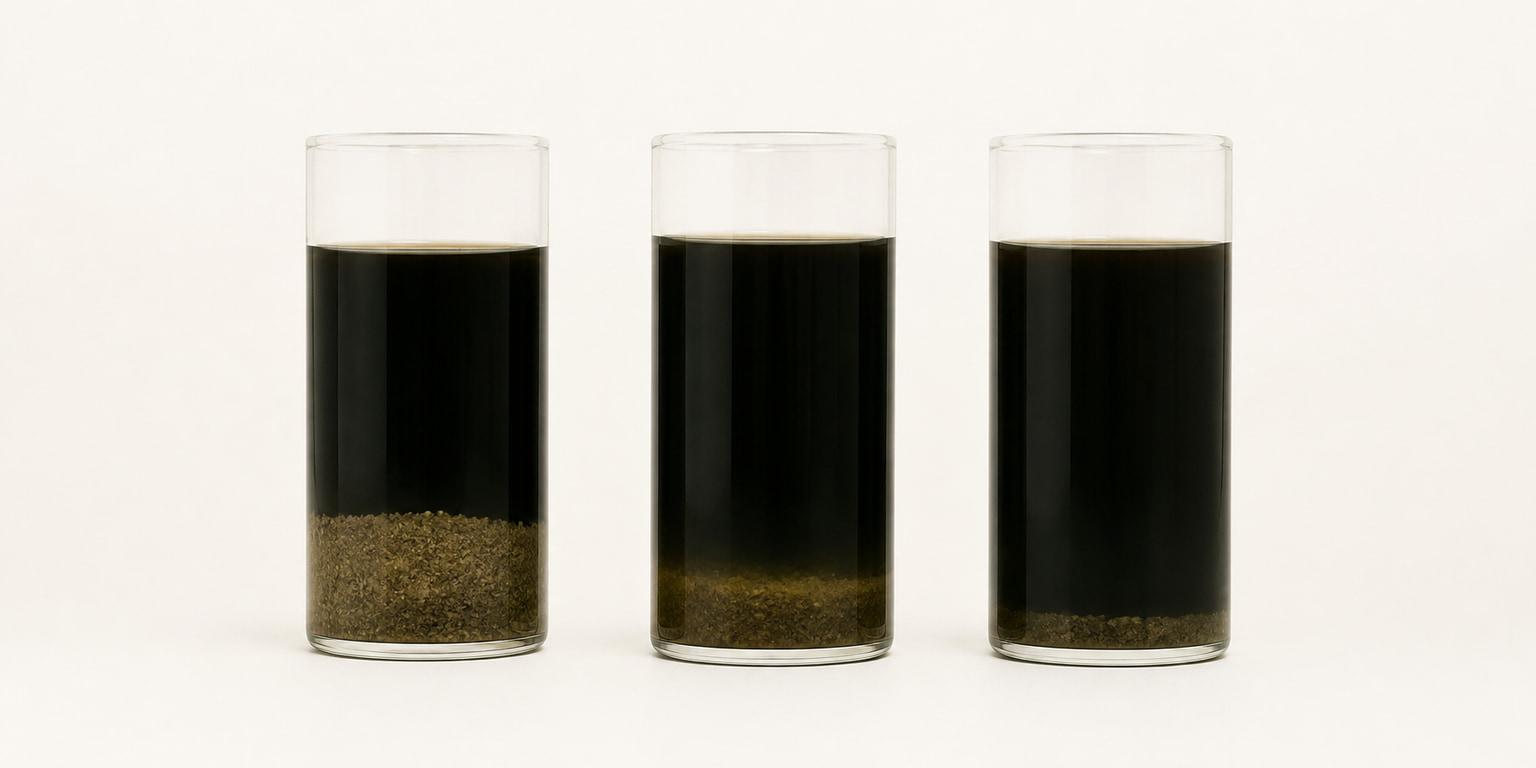
Manure pit additives fall into three groups. Masking agents cover odor with fragrance. Chemical additives bind or oxidize odor compounds fast, then wear off. Biological additives add bacteria that help break down the fiber behind crust and hardpan. Masking and chemical work in hours. With biological treatment, most producers notice a difference within the first month, and significant results are normally measured after about six months.
What are you actually buying?
Walk any farm show and you will find a dozen jugs that all promise the same thing. Less smell. Less crust. Easier pumping. The label copy is close to identical. What is not identical is the mechanism, and mechanism is the only thing that tells you what the product will still be doing in November.
There are three real categories. Everything on the market is one of them or a blend of two.
- Masking agents. Fragrance. They change what your nose picks up.
- Chemical additives. Oxidizers, acidifiers, and binders. They react with odor compounds or change pit chemistry.
- Biological additives. Live bacteria and enzymes. They digest material that is already in the pit.
Each one does something real. Each one stops at a different place. If you know where it stops, you can decide whether it fits your problem.
What do masking agents do?
A masking agent is a perfume. Pine, citrus, cherry, or a proprietary "counteractant" blend that is supposed to neutralize the receptor response rather than just cover it. You fog it in the barn, hang it on the fan bank, or pour it in the pit.
Here is the fair part: it works, and it works right now. If the county board is touring Thursday morning, or your neighbor's daughter is getting married in the yard a half mile downwind, a masking agent is a legitimate tool. Nothing else on this list moves that fast.
Here is where it stops. The hydrogen sulfide is still there. The ammonia is still there. The crust is still there. The fiber on the bottom is still there. Nothing about the pit has changed, and when the fragrance is gone, usually a matter of days, you are back where you started. Some people also find a masked odor more objectionable than the original, because cherry and manure together read as something being hidden.
Masking agents are event tools. They are not a pit management program.
What do chemical additives do?
This is the broadest group and the one where the honest answer takes the longest.
Oxidizers such as hydrogen peroxide, sodium nitrate, or potassium permanganate attack reduced sulfur compounds directly. Hydrogen sulfide is a reduced compound. Oxidize it and the smell goes away, fast, because the molecule is gone. On a foaming or gassy pit this can be a genuine short-term safety measure.
Acidifiers, typically sulfuric acid on the commercial side, lower slurry pH. Ammonia and ammonium sit in an equilibrium that pH controls. Push the pH down and more of the nitrogen stays as ammonium in solution instead of leaving as ammonia gas. That is real chemistry, it is well documented in the emissions literature, and it holds nitrogen in the manure. It is also a hazardous material to store and handle on a farm, and the dose is not small.
Binders such as zeolite and clay minerals adsorb ammonium onto their surface. They hold nitrogen and cut odor while they have capacity. When the sites fill, they are done.
What all three share is that they are consumed. A chemical additive is a reagent. It reacts, it is spent, and the effect ends. Dose again and you get the effect again. That is not a flaw, it is what chemistry is. The trouble starts when a reagent is expected to do a biological job. None of these digest fiber. An oxidizer will knock the smell off a crusted pit and leave the crust exactly where it was. Some oxidizers and disinfectants also take out whatever bacterial population you had left, which makes the underlying problem worse over the winter.
If your problem is a gas reading today, chemistry is the right answer. If your problem is eighteen inches of mat on top and a hardpan on the bottom, chemistry will not touch it. Foam is its own situation, and the fire risk changes the priority order. See why manure pit foam is a flash fire hazard.
What do biological additives do?
A biological additive, sometimes called bioaugmentation, adds living bacteria to a system that already runs on bacteria. Your pit is a digester whether you treat it or not.
The reason a pit stalls is usually specific. The bacterial population that digests cellulose fiber collapses. Fiber comes from undigested feed and from bedding, and it is the hardest thing in the pit to break down. When the fiber digesters go, everything else keeps working and the fiber piles up. Light fiber floats and becomes crust. Heavy fiber settles and becomes hardpan. Gas produced in the middle gets trapped between the two layers, which is why a crusted pit belches when you finally break it open.
Rebuild that population and the sequence runs in reverse. Fiber digests, solids liquefy, gas releases steadily instead of all at once, the crust loses the mat that holds it together, and the dry surface flies breed on is gone.
PitCharger products are formulated for specific manure-management problems. Depending on the product, formulations may include aerobic, anaerobic, and facultative bacteria, enzymes, or other specific modes of action. Not every PitCharger product uses the same ingredients or works the same way, and the product is selected based on the problem being treated. It has been on the market since 1998. Some competing products are enzyme-only, which is worth knowing about: enzymes are catalysts, not organisms. They speed a reaction but they do not reproduce, so an enzyme-only product behaves more like a chemical additive in terms of persistence. Single-strain bacterial products exist too and are more sensitive to a pit that swings on pH, temperature, or antibiotic load.
The catch with biology is time. Most producers should notice a difference within the first month, with continued improvement through the second and third months. Significant results are normally measured after about six months. That is not a minimum program; it is the point where broader changes in the manure system are measured. Anyone selling you a biological that fixes a hardpan in a week is selling you something else. More at how PitCharger works, and on the fiber problem itself at what causes manure crusting.
Side by side
| Masking agent | Chemical additive | Biological additive | |
|---|---|---|---|
| Mechanism | Fragrance covers or counteracts odor perception | Oxidizes, binds, or acidifies odor compounds and shifts pit chemistry | Live bacteria and enzymes digest cellulose fiber and organic solids |
| Effect on solids | None | None from oxidizers or binders; no fiber digestion | Fiber breaks down, crust and hardpan lose structure, solids liquefy |
| Effect on odor | Changes what you smell, source unchanged | Real reduction while the reagent is active, especially hydrogen sulfide and ammonia | Reduction as the fiber mat and trapped gas pockets go away. A year-long Iowa State/Farmland study, as reported by PitCharger, showed approximately 50% odor reduction |
| Speed | Minutes to hours | Hours to days | Odor often within the first week; a difference in month one; significant results at about six months |
| Persistence | Ends when the fragrance dissipates, typically days | Ends when the reagent is consumed | Population persists and reproduces while it is fed and maintained |
| Cost pattern | Recurring per application, scales with barn air volume | Recurring per dose, scales with slurry volume | Monthly dose scaled to head count, roughly 1 gallon per month per 1,000 head |
| Safety | Generally low hazard, check the label for confined space use | Varies widely. Concentrated acids and strong oxidizers are handling hazards | Biological, not caustic. Safe around cattle, horses, pets, children, and vegetation |
Which problem are you actually solving?
Sort it by what is bothering you.
- A complaint this week, or a gas reading you do not like. Chemistry or masking. They are the only things that move on that timeline.
- Crust you have to chop, flies you cannot get ahead of, a pit that will not draw down. Biological. Nothing else digests fiber, and fiber is what those three have in common. Start with Manure Digester for the general condition, or LTC-E when the manure carries a lot of fiber and the crust is the problem.
- Odor as an ongoing condition, not an event. Biological. You are treating the source, and the source takes time. N-Loc is built for that.
- Nitrogen leaving the pit as ammonia. Acidification holds it chemically. Biology converts organic nitrogen to plant-available ammonium, a different lever on the same problem. See organic vs. ammonium nitrogen in manure.
Plenty of operations run more than one. A masking agent the week of an open house does not conflict with a biological program. Running a strong oxidizer continuously does, because you are killing the population you are paying to build.
How do you tell whether it worked?
Decide the measurement before you buy anything. Otherwise you are grading on how the barn feels, and how the barn feels depends on wind and humidity as much as anything you poured in.
Things you can measure without special equipment:
- Push rod depth. Sound the pit in the same spots every month. Record crust thickness and depth to hardpan.
- Agitation hours. Time it. Same pit, same pump, same operator.
- Fly counts. Same number of sticky ribbons, same locations, same number of days, then count.
- Manure test results. Sample the same way each time and watch the ammonium nitrogen number.
- Complaint calls. Keep a log with dates and wind direction.
Run the comparison long enough to mean something. Most producers notice a difference within the first month, but significant results are normally measured after about six months.
PitCharger sells consultatively. Somebody talks to you about head count, pit dimensions, bedding, and what your pit is doing before anything ships. There is no cart and no published price, because dosing a 4,000-head finishing barn and dosing an earthen lagoon are not the same job and a checkout page cannot tell the difference. Different problems require different treatment approaches. For a number on your own operation, use the treatment calculator or ask for a treatment plan.
For background reading from somebody not selling you anything, Iowa State University Extension and Outreach and University of Minnesota Extension publish manure management material, and NIOSH covers manure gas and confined space hazards.
Frequently asked questions
Can I use a chemical additive and a biological additive at the same time?
Usually not in the same pit at the same time. Strong oxidizers and disinfectants do not distinguish between the bacteria causing your odor and the bacteria you paid for. If you need an emergency chemical knockdown, do it, then restart the biological program afterward and expect the clock to start over.
How long before a biological additive shows anything?
Odor tends to move first. A year-long Iowa State/Farmland study, as reported by PitCharger, showed approximately a 50% reduction in hydrogen sulfide, ammonia, and overall odor compared with untreated buildings, and some producers have noticed a substantial change within the first 24 hours. Most producers should notice a difference within the first month, with continued improvement through the second and third months. Significant results are normally measured after about six months. That is not a minimum program; it is the point where broader changes in the manure system are measured.
Do enzyme products count as biological?
Partly. Enzymes are catalysts that speed specific reactions, and they help. They do not reproduce. An enzyme-only product behaves more like a chemical additive in terms of persistence, because once the enzyme is spent it is gone. Depending on the product, PitCharger formulations may include bacteria, enzymes, or other specific modes of action, selected for the problem being treated.
Will an additive replace agitation?
No, and be suspicious of anyone who says it will. You still agitate and you still pump. What changes with a biological program is what you are agitating: liquefied material instead of a mat over a hardpan. That shows up as agitation hours, not as skipping the job. See what changes when solids liquefy.
Is a masking agent ever the right call?
Yes. For a defined event on a defined day, it is the only category that works that fast. Just do not confuse it with pit management. It changes what your nose reports and nothing else.