

Feed Digester
For feed spills and concentrated organic material, including heavy grain buildup and feed islands.
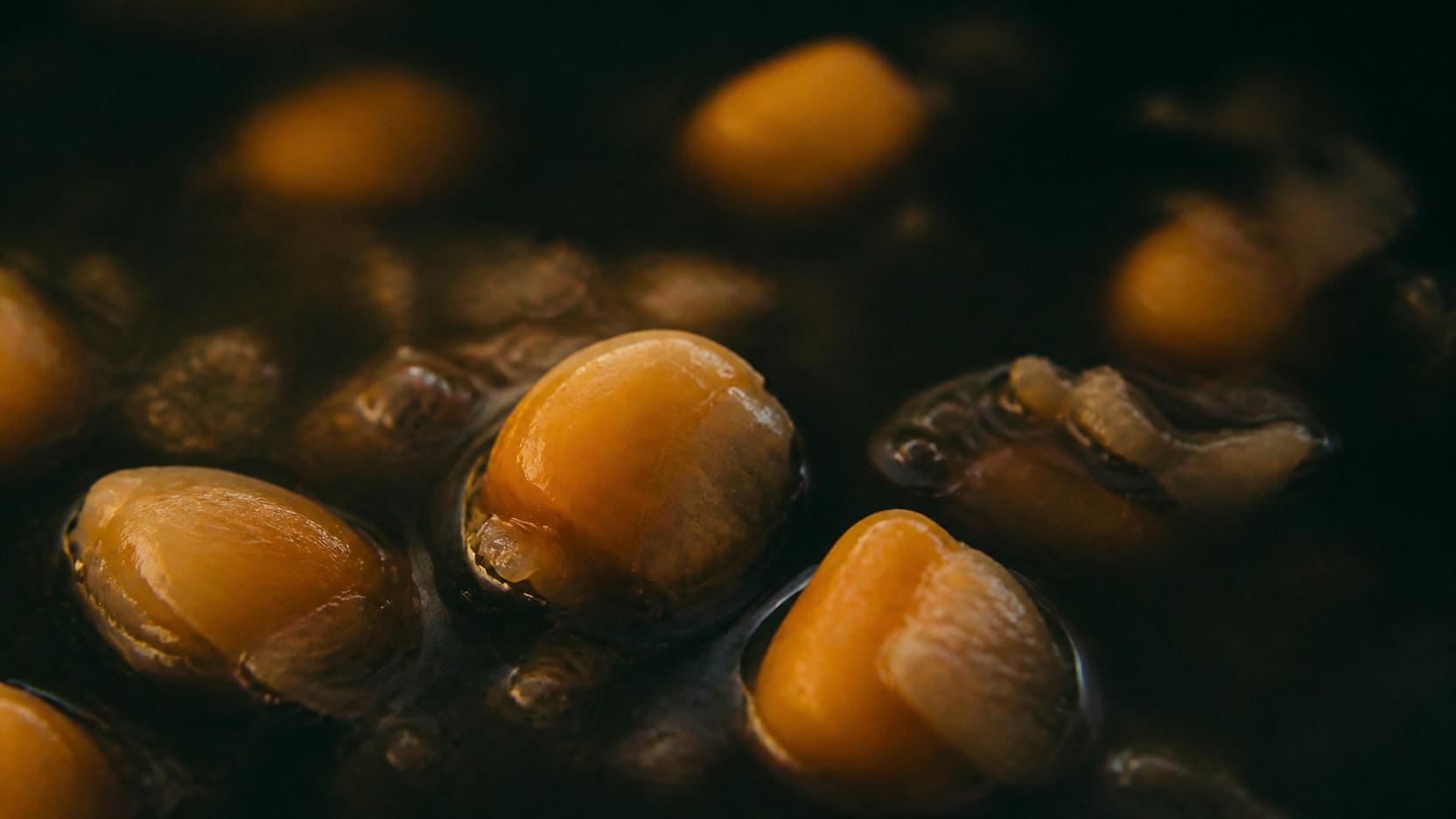
Feed Digester is a specialty product designed for heavy grain buildup in manure systems. Spilled grain can pack together into dense, airtight mounds or "islands" that may remain in the system for years. Without treatment, removing that buildup can require intense, very costly labor to physically break the island apart.
The problem it solves
Feed spillage is unavoidable. Feeders overflow, augers leak, animals waste, and a percentage of every ration ends up in the pit as whole or partly whole grain rather than as digested manure. On a large operation the annual volume is substantial.
The trouble is that spilled feed is far more resistant to breakdown than manure. Corn pith in particular — the pithy core material — is largely cellulose and lignin, and it can sit in a pit for months looking essentially unchanged. It is one of the main raw materials of both surface crust and bottom hardpan.
The immediate operational hit is equipment. Undigested grain and fiber clog pump intakes, wrap in agitator shafts, plug irrigation nozzles during land application, and turn a routine pump-out into an afternoon of clearing blockages. Every one of those stoppages is labor at the worst possible time of year.
How it works
Feed Digester uses a combination of bacteria and enzymes to break down the pith and outer structure of the grain, helping weaken the heavy feed pack so it can begin to break apart and move through the manure system.
Because feed spill is often the actual origin of a crust or hardpan, digesting it upstream reduces the material that would otherwise become tomorrow's problem. This is a preventive product as much as a corrective one.
What results look like
PitCharger has used Feed Digester on feed islands ranging from a few hundred pounds to approximately 25 tons. That range is the company's own field experience, not a guaranteed outcome for any one spill.
Feed spills are not all the same, and proper application matters. Where the product is applied, how it is applied, and what is done to help the treatment work can make a major difference in the outcome. For that reason, we recommend talking with PitCharger before treating a significant feed spill so we can help determine the proper treatment approach for that specific situation.
Specifications
| Form | Liquid concentrate |
|---|---|
| Active | Bacteria and enzymes |
| Targets | Spilled grain, corn pith, bedding fiber, organic feed waste |
| Container sizes | 3-gallon and 5-gallon buckets |
| Shipping | UPS, Spee-Dee Delivery, or LTL freight |
| Typical rate | Set on a call, based on the size and location of the spill |
| Field experience | Feed islands from a few hundred pounds to ~25 tons (company-reported) |
| Results timeline | Most notice a difference in month one; significant results measured at about six months |
| Auto-Ship | Available — scheduled monthly delivery |
| Safety | Safe around cattle, horses, pets, children, and vegetation |
| On market since | 1998 |
Where it applies
- Finishing barns with high feeder waste
- Poultry houses with grain and pith accumulation
- Operations with recurring pump and agitator clogging
- Facilities using irrigation for land application
- Any pit where whole grain is visible in the manure
Dosing and shipping
Rate depends more on how much feed is reaching the pit than on head count alone. If you have had recent feeder or auger problems, or you can see intact grain when you agitate, say so during the consultation — it changes the program materially.
PitCharger ships by UPS, Spee-Dee Delivery, and LTL freight, depending on the size and destination of the order. Auto-Ship is available for customers who want scheduled monthly delivery. Most producers notice a difference within the first month; significant results are normally measured after about six months.
Feed Digester questions
What if I have a feed spill?
Call before you treat it. Feed Digester is a specialty product for dense grain buildup or feed islands, and because where and how it is applied makes a major difference in the outcome, we want to help determine the right approach for that specific spill first.
Why does spilled feed not break down on its own?
Grain and especially corn pith are high in cellulose and lignin, which need specific bacteria to digest. In a confinement pit those populations are usually depleted. Manure breaks down and the grain sits there, which is why you can find recognizable corn in a pit months later.
Will this fix my clogging problem?
It addresses the organic portion — grain, pith, and fiber. It will not do anything about rocks, twine, gloves, or hardware, which are the other common causes. If your clogs are mostly organic, this is the right tool.
Do I need this if I am already using Manure Digester?
Different PitCharger products are formulated for different problems. Manure Digester is the general monthly treatment. Feed Digester is a specialty product for dense grain buildup, feed islands, and concentrated organic material. The consultation is where we sort out whether you need one product or two.
Does it work on bedding?
Yes. Straw, cornstalks, and wood shavings are cellulose, the same material class as corn pith, and the same strains work on them. Heavy bedding operations are a common use case.
How long before pump-out should I start?
At least 90 days for a meaningful reduction. Starting a program a few weeks before you pump will not accomplish much — the bacteria need time to establish and work through accumulated material.
Related
Products
- Manure Digester: PitCharger's flagship product for monthly manure treatment. Contains up to 51 strains of bacteria
- LTC-E: Liquid treatment for higher-fiber manure and crusting, monthly or as an amendment when a crust needs extra help
- N-Loc: For maximum odor reduction. Addresses odor-producing compounds in the system rather than masking them