

Foam is not one problem, and it should not be treated like one.
Producers can deal with several different types of foam, and each type requires a different treatment protocol. As a company, we look at foam based on both the type of foam and how severe the problem has become. If you have spent money trying to control foam and are not getting results, the problem may be that the foam has been misidentified or treated with the wrong product.
If your pit is foaming right now
Treat it as an active explosion and gas hazard before anything else. Ventilate at maximum during agitation, remove ignition sources near the pit, keep people and animals out during agitation, and monitor gas. Then call 833-258-7631 the same day.

What kind of foam are you seeing?
- Methane foam
- Can form a thick blanket over the pit, sometimes several feet deep, trapping large amounts of gas and creating a serious safety and fire hazard.
- Mechanical foam
- Can develop during agitation, stirring, or pumping.
- Other thick or slimy foams
- Form for different reasons and may not respond to the same treatment.
Each type of foam requires a different treatment protocol, and the right protocol also depends on how far along the problem is. A few inches of foam and a blanket that is several feet deep and still rising are not treated the same way.
We have a treatment for that
If you are hauling manure and 40% of your tank is filled with trapped air and gas, we have a treatment for that. If you have two or three feet of methane foam in a barn, we have a treatment for that. If you have a thick, slimy foam that is not responding to treatment, we can help identify what is causing it and what to do next.
The goal is the same in every case: get the foam down, get the gas releasing steadily instead of building under a blanket, and get the barn back to a state where you can agitate and pump without a hazard under the floor.
The key is knowing exactly what kind of foam problem you are dealing with and what stage it is in. We do not want you trying to diagnose that from a website description. Give us a call, explain what you are seeing, and we will walk through the situation with you and recommend the right treatment plan for that specific barn.
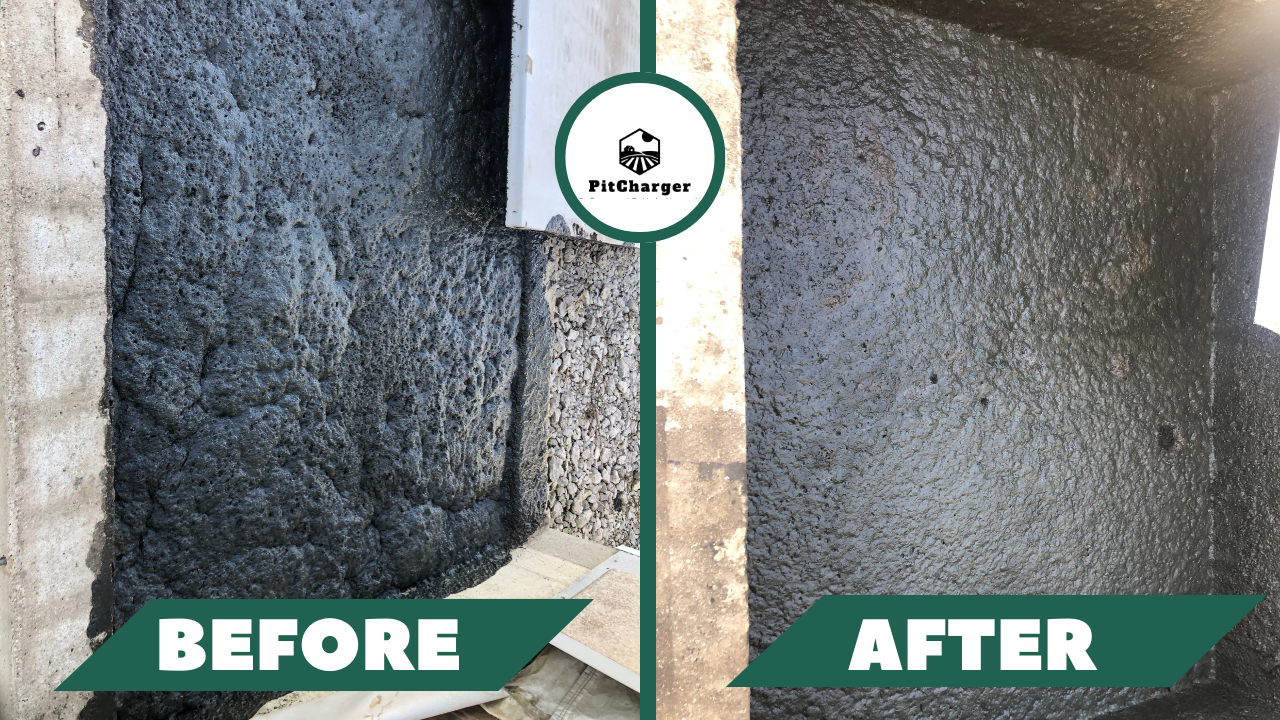
What it looks like when it works
Foam, in questions
How do I know which foam treatment I need?
Foam can have different causes, including methane foam, mechanical foam from agitation or pumping, and other thick or slimy foams. The correct treatment depends on identifying the type of foam first and how far along it is. Call us, explain what you are seeing, and we will walk through it with you.
Why is manure pit foam dangerous?
Methane foam traps gas in a stabilized bubble structure. Methane is explosive in air between roughly 5 and 15 percent, and a foaming deep pit holds a large volume of it beneath a floor that contains heaters, motors, welders, and static. Flash fires in foaming hog barns have destroyed buildings and killed animals and people. A foam collapse during agitation can also release lethal concentrations of hydrogen sulfide.
What should I do right now if my pit is foaming?
Treat it as an active hazard. Ventilate at maximum during any agitation, eliminate ignition sources near the pit, keep people and animals out during agitation, and monitor gas. Then call 833-258-7631 the same day. Do not agitate a heavily foaming pit casually; a collapse can release lethal hydrogen sulfide in seconds.
I already spent money on foam control and it did not work. Why?
The most common reason is that the foam was misidentified or treated with the wrong product. Each type of foam requires a different treatment protocol, and a treatment matched to the wrong foam can do very little. Tell us what you tried and what you are seeing now.
How long until the foam goes down?
It depends on the type of foam, how severe it is, and the protocol matched to it. If you need an immediate knockdown for safety while treatment gets started, tell us; that is a reasonable combination and we would rather you be safe.
Will it come back after treatment?
If the ration and management stay the same, the conditions that produced foam can re-establish over subsequent months. Most operations that have foamed once stay on a program permanently, because the downside risk is not worth the saved gallons.
Related
Products
- Manure Digester: PitCharger's flagship product for monthly manure treatment. Contains up to 51 strains of bacteria
- LTC-E: Liquid treatment for higher-fiber manure and crusting, monthly or as an amendment when a crust needs extra help
- N-Loc: For maximum odor reduction. Addresses odor-producing compounds in the system rather than masking them