

Manure management for cattle barns
Cattle manure systems can vary dramatically from one building to another. Many cattle barns use pits that are 12 to 14 feet deep, and the layout, manure flow, and storage design can differ substantially between operations. Because of that, a management plan built around the specific building is important.
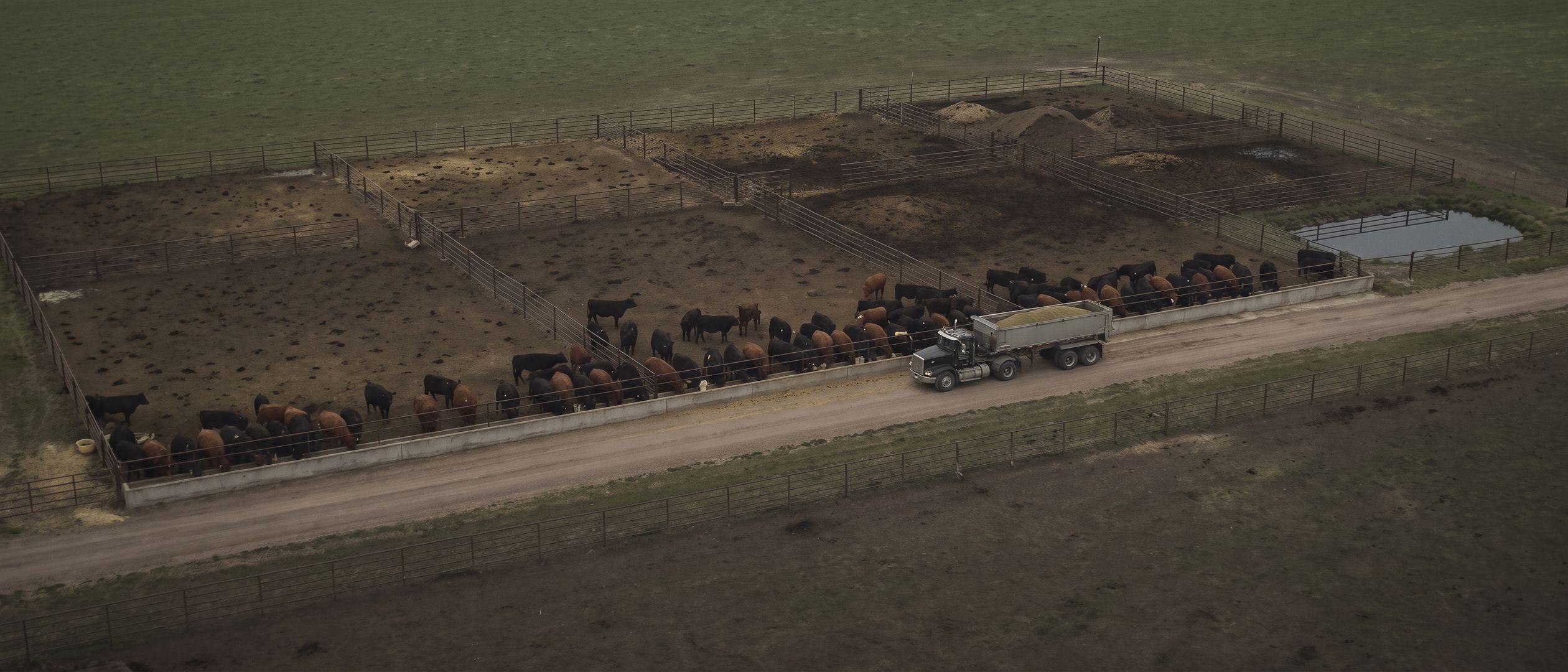
At a glance
| Structures treated | Barn pits (often 12 to 14 feet deep), lagoons, pumping stations |
|---|---|
| Typical starting rate | ~1 gallon per month per 75 animals |
| Lagoons | Adjusted for manure already stored plus monthly additions |
| Most common complaint | Heavy fiber loads, surface crust, and fly pressure |
| First thing to move | Odor, often within the first week |
| Results | A difference in month one; significant results measured at about six months |
Why does cattle manure need a plan built for the barn?
PitCharger products are designed to work with the higher-fiber manure common in cattle operations. Cattle diets that include corn stalks, corn, soybean meal, and other fibrous feed ingredients can create heavier fiber loads in the manure system. PitCharger treatments are used to help break down that material so manure moves and pumps more effectively.
The best results come from matching the product and treatment plan to the individual barn, pit design, and manure-management routine.
A common monthly treatment rate for cattle operations is about one gallon per 75 animals, with adjustments based on loading, storage conditions, system design, and the problem being treated.
Why do cattle lagoons crust so heavily?
Bedding. Cattle operations put far more cellulose into the manure stream than most hog operations do — straw, cornstalks, wood shavings, plus a ration that is already high in forage fiber. Cellulose is the single hardest thing for a manure system to digest, and it is the raw material a crust is built from.
In an earthen lagoon that fiber floats, mats, and dries on top into a surface you can sometimes walk on. The crust seals gas underneath, occupies freeboard you need for storage, and gives flies an enormous warm moist breeding deck that sits undisturbed for weeks at a time.
The same fiber that floats also settles. Over years, the fraction that sinks compacts into a sludge layer that behaves like soil, and it quietly takes a large share of the volume you built the lagoon to have.

What does fly pressure actually cost a cattle operation?
More than the nuisance suggests. Stable flies feed on blood and cattle respond by bunching, standing in water, and interrupting grazing and feeding. That behavior shows up as reduced intake and lost weight gain during exactly the months you are trying to put on pounds.
House flies carry pathogens between animals and between pens, and heavy populations do not respect property lines. Fly complaints from neighbors are one of the more common ways a well-run cattle operation ends up in a conversation with a county board.
Spray programs treat adults. A crusted lagoon can produce new adults faster than any adulticide keeps up with, which is why operations spraying all summer still have flies all summer. Removing the breeding surface changes the arithmetic, and that starts with breaking down the fiber mat rather than killing anything.
How does treatment change agitation and pumping?
Settled solids are the reason agitation takes as long as it does. Hardpan does not go into suspension easily, so you run the agitator longer, burn more fuel, and put abrasive material through pumps and equipment before the load is pumpable.
As treatment helps break down solids and fibrous material, they become easier to suspend during agitation. Agitation reaches a pumpable state sooner and the bottom of the structure comes up cleaner at pump-out. Operations that supply their current agitation hours can get an estimated reduction from the calculator on this site, clearly labeled an estimate.
Recovered capacity is the other half. A livestock producer in Mankato, Minnesota reported recovering approximately 200,000 gallons of usable lagoon capacity after treatment — volume that was there all along under sludge. For an operation being forced into pump-out timing by a shrinking lagoon rather than by field conditions, that is the difference between spreading when it suits the crop and spreading when the lagoon says so.
What is treated manure worth as fertilizer?
More than untreated, and the mechanism is specific. Much of the nitrogen in raw manure is in organic form, which a plant cannot take up directly — it has to be mineralized by soil biology first, on a timeline you do not control and partly in a year you did not intend.
Bacterial activity in the pit or lagoon converts organic nitrogen into ammonium nitrogen, which plants take up directly. The practical result is that more of the nitrogen you already paid for in feed reaches the crop in the season you applied it.
There is a loss side too. Ammonia volatilizing off a stalled lagoon surface is nitrogen leaving as gas and taking your odor complaints with it. A digesting system holds more of that nitrogen in solution where it belongs.
What we would start you on
Sized in the consultation, not off a shelf — but these are the products that usually come up for this kind of operation.
LTC-E
Liquid treatment for higher-fiber manure and crusting, monthly or as an amendment when a crust needs extra help.

Manure Digester
PitCharger's flagship product for monthly manure treatment. Contains up to 51 strains of bacteria.

N-Loc
For maximum odor reduction. Addresses odor-producing compounds in the system rather than masking them.
Cattle Barns: common questions
How is this different from just agitating more often?
Agitation temporarily suspends solids so you can pump them. It does not reduce how much material is there. Treatment digests the material, so there is less of it. Agitation moves the problem around; digestion removes it.
Will it work in an outdoor lagoon over winter?
Bacterial activity slows as temperature drops, so an outdoor earthen lagoon works more slowly in winter than in summer. Underground and covered pits stay warmer and are less affected. Climate and structure are part of how we set rates and expectations.
How much do I need for a lagoon rather than a pit?
A common monthly rate for cattle is about one gallon per 75 animals. Lagoon treatment rates may be adjusted based on the amount of manure already in the lagoon and the amount expected to be added each month, so bring your lagoon capacity in gallons and your loading to the consultation.
Is it safe around cattle and horses?
Yes. PitCharger products are described as safe around cattle, horses, pets, children, and vegetation.
How soon will flies drop off?
Most producers notice a difference within the first month, and fly populations fall a few weeks behind the crust breakup as the last generation already in the mat finishes its cycle. Carl, a producer in Mankato, Minnesota, reported flies close to non-existent after the crusting issue resolved.
Where we work
PitCharger ships from Elkhorn, Nebraska. Since 1998, PitCharger products have been used by producers in 45 states, Puerto Rico, and three countries. PitCharger ships by UPS, Spee-Dee Delivery, and LTL freight, depending on the size and destination of the order. Auto-Ship is available for customers who want scheduled monthly delivery.
Related
Products
- LTC-E: Liquid treatment for higher-fiber manure and crusting, monthly or as an amendment when a crust needs extra help
- Manure Digester: PitCharger's flagship product for monthly manure treatment. Contains up to 51 strains of bacteria
- N-Loc: For maximum odor reduction. Addresses odor-producing compounds in the system rather than masking them