

What Causes Crusting in Manure Pits and Lagoons, and How to Break It Up
By PitCharger · Published · Updated
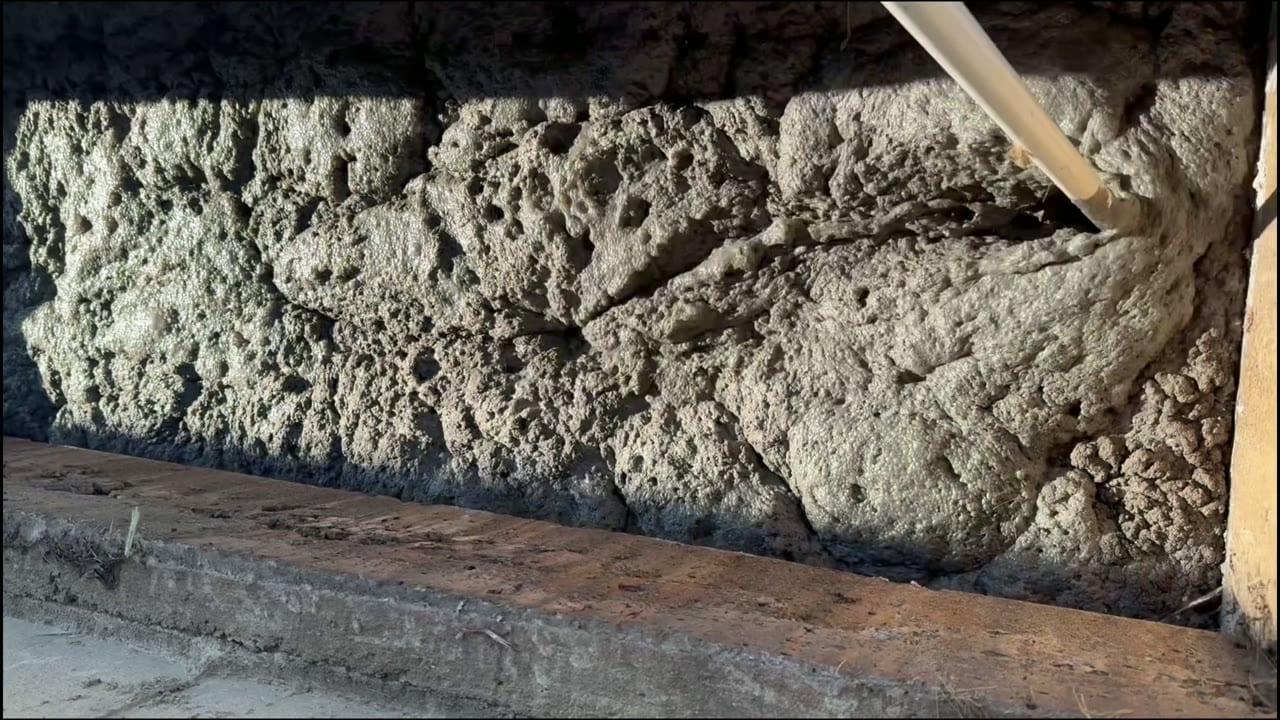
Manure crust is cellulose fiber that stopped breaking down. Undigested feed and bedding float to the surface and mat together when the bacteria that digest fiber die back. Chopping the crust with an agitator only cuts it into pieces. Removing it for good means rebuilding the bacterial population that eats fiber.
A crust is easy to describe and hard to get rid of. It is the mat on top of your pit or lagoon that you can nearly walk on. Some are two inches thick. Some are two feet, with volunteer weeds growing out of them and standing water on top.
Producers usually blame the crust on solids in general. That is close but not precise enough to be useful. Solids in a pit are a mixed bag: fine particles that stay suspended, heavy grit and sand that go straight to the bottom, and fiber. Only one of those three builds a crust.
What is a manure crust actually made of?
Fiber. Specifically cellulose fiber from two sources: feed the animal did not fully digest, and bedding.
Cellulose is the structural material in plant cell walls. It is a long chain of glucose molecules linked in a way that most animals cannot break on their own. A hog digests a portion of the fiber in the ration and passes the rest. Corn stalk residue, soy hulls, distillers grains fiber, straw, cornstalk bedding, wood shavings. All of it lands in the pit still largely intact.
Fiber is also light. It floats. Grit sinks, fines stay suspended, and fiber climbs to the top and mats together into a felt. Gas bubbles rising from below get caught in that felt and make it more buoyant still, which is why a mature crust often floats higher than it should and why it can lift and heave.
So the crust is a fiber mat. Now the real question.
Why does the crust form in the first place?
Because the bacteria that digest cellulose stopped working.
In a healthy pit, a population of fiber-degrading bacteria breaks cellulose down into simpler compounds that the rest of the anaerobic community can finish off. That is the same sequence that runs in a working anaerobic digester and in a cow's rumen. When that population is healthy, fiber that comes in gets converted, solids stay liquid, and gas releases steadily off the surface.
That population is fragile. It gets knocked back by cold, by ration changes, by antibiotics and cleaning chemicals coming down the pit, by a pit that got pumped down to bare bottom and lost its seed population, by sudden loading. It does not announce itself when it crashes. It just quits keeping up.
Once fiber comes in faster than it gets digested, three things happen in order, and they always happen in this order:
- Fiber accumulates and floats. A crust forms on top.
- Heavier material accumulates and settles. A hardpan builds on the bottom.
- Gas gets trapped between the two, because the crust seals the surface.
That third one is why crust is not just a nuisance. The crust is a lid. A sealed pit does not release gas steadily, it releases it in slugs, and it can also foam. If you are dealing with foam under the slats, read why manure pit foam is a flash fire hazard before your next agitation, because the two problems share a cause.
Why doesn't agitation break up the crust for good?
Because agitation is a knife, not a solution.
Run the pump hard enough and long enough and you will chop the mat into chunks and suspend them. Then you pump, the tanker leaves, and the fiber you chopped up is still fiber. It is exactly the same material, in smaller pieces, and there is still no bacterial population to digest it. It floats back up and re-mats over the next weeks and months. Meanwhile you paid for the agitation hours, the fuel, the wear on the pump, and the risk of a heavy agitation day.
Mechanical breakup also has real costs beyond fuel:
- Agitation hours climb every year. A crust that took four hours to work down last year takes six this year.
- Pump and driveline wear. Fiber mats are hard on equipment. Chopping a two-foot mat is not what most agitators were designed to do.
- Uneven nutrient loading. If the crust does not fully suspend, part of your nitrogen leaves the barn on the first load and part stays in the pit.
- Gas release risk. Aggressive agitation into a sealed crust is exactly the scenario that puts a slug of methane and hydrogen sulfide into a barn at once.
The other common approach is chemical: caustics, surfactants, and acids. These attack the mat physically, and some of them work in the short term. They also do nothing to restore the biology, they can be hazardous to handle, and depending on the product they can be hard on concrete, steel, pumps, and anything living that contacts them.
| Approach | What it does to the crust | What it does to the cause | Repeat interval | Notes |
|---|---|---|---|---|
| Mechanical agitation | Chops and suspends the mat | Nothing. Fiber is unchanged | Every pump-out, and hours grow each year | Fuel, wear, and the highest-risk hours on the operation |
| Caustics and surfactants | Attacks or disperses the mat chemically | Nothing, and can further suppress biology | Ongoing | Handling hazards, potential effects on concrete, steel, and equipment |
| Physical removal or dredging | Removes the mat directly | Nothing | As needed | Expensive, disruptive, needs equipment and a place to put it |
| Biological treatment | Helps break down the fiber that forms the mat | Weakens the crust so it moves back into the manure | Monthly treatment | A difference in month one; significant results measured at about six months. Not instant |
How does biological treatment break up a crust?
Bioaugmentation means adding selected bacteria to help a system break down material its existing bacterial population is not handling. Instead of attacking the mat, you help break down the fiber it is made of.
PitCharger products are formulated for specific manure-management problems. Depending on the product, formulations may include aerobic, anaerobic, and facultative bacteria, enzymes, or other specific modes of action. Not every PitCharger product uses the same ingredients or works the same way, and the product is selected based on the problem being treated. It has been on the market since 1998.
When the fiber-digesting population comes back, the sequence from earlier runs in reverse. Solids liquefy. Gas releases steadily instead of collecting under a sealed lid. The crust loses the fiber that held it together and breaks up. The bottom hardpan starts to give up material too.
Two side effects matter to the operator.
Flies. A crust is not just ugly, it is a nursery. House flies and stable flies need a moist solid surface to lay on. Open liquid does not give them one, but a firm crust does. Take the crust away and the breeding surface goes with it. Carl, a livestock producer in Mankato, Minnesota, put it this way: "Since using PitCharger, we haven't had the crusting issue we previously experienced and flies are close to non-existent." A livestock producer in Mankato, Minnesota reported recovering approximately 200,000 gallons of usable lagoon capacity after treatment. That is the subject of a separate article on lagoon storage lost to solids.
Nitrogen. Biological treatment converts organic nitrogen to plant-available ammonium nitrogen. Organic N has to mineralize in the soil before a crop can use it, and the timing is out of your control. Ammonium N is available now. Same gallons hauled, more fertilizer value per gallon.
Nick, who runs pits for a livestock cooperative in central Iowa, ran side-by-side pits and reported: "Tests were very positive on the reduction of solids. Pits with additive showed significant reduction of solids compared to non-treated pits."
How much, and how long?
Dosing runs roughly one gallon per month per 1,000 head. A 4,000-head finishing barn is about four gallons a month. Earthen lagoons take a higher rate because of the volume and the surface exposure. The dosing calculator will size it for your head count and storage type.
Most producers should notice a difference within the first month, with continued improvement through the second and third months. Significant results are normally measured after about six months. That is not a minimum program; it is the point where broader changes in the manure system are measured. On a heavy multi-year crust, a deep pit can keep improving below the surface before the top looks different, and anyone who promises a faster visible change is guessing.
PitCharger ships by UPS, Spee-Dee Delivery, and LTL freight, depending on the size and destination of the order, and Auto-Ship is available for scheduled monthly delivery. PitCharger products are described as safe around cattle, horses, pets, children, and vegetation.
For ongoing monthly treatment, look at Manure Digester. For high-fiber manure and crusting, LTC-E; for dried crust at washout, Crust Digester. For neighbor complaints, N-Loc. If you are not sure which applies, that is what a treatment plan is for, and it starts with questions about your barn rather than a product recommendation. The full mechanism is written out on how PitCharger works, and unfamiliar terms are defined in the glossary.
Frequently asked questions
Why did my pit suddenly start crusting after years of running clean?
Something changed the biology or the fiber load. Common culprits are a ration change that raised fiber, a switch in bedding, cold weather that slowed the population, cleaning chemicals or medication coming down the pit, or a full pump-out that stripped the pit to bare bottom and took the seed population with it. Look back at what changed in the six months before the crust showed up.
Will treatment work if I have sand or grit in the pit?
Biological treatment digests organic material. Sand, grit, and mineral solids are not organic and will not be digested by anything. If a meaningful share of your bottom accumulation is sand bedding or dirt tracked in, treatment will reduce the organic fraction and leave the mineral fraction where it is. That is worth knowing before you set expectations.
Do I have to stop agitating if I treat?
No. Keep agitating and pumping on your normal schedule. Treatment is not a replacement for pump-out, it changes what you are pumping. Most operations find agitation gets easier over time rather than getting skipped. Every agitation safety rule still applies: maximum ventilation, no ignition sources, nobody in the barn.
How soon will I notice something?
A year-long Iowa State/Farmland study, as reported by PitCharger, showed approximately a 50% reduction in hydrogen sulfide, ammonia, and overall odor compared with untreated buildings, and some producers have noticed a substantial change within the first 24 hours. Producers can often notice a significant change in odor within the first week, and it is usually the first thing anyone notices. Crust change is slower. Most producers notice a difference within the first month, and significant results are normally measured after about six months.
What if it does not work on my pit?
Then you want to know that before you buy, which is why PitCharger sells consultatively rather than out of a cart. Every treatment starts with understanding your operation, the manure system, and the specific problem you are dealing with. Call 833-258-7631 or email info@pitcharger.com.