

How PitCharger restarts a stalled pit
PitCharger helps restore biological activity in manure pits and lagoons when the existing system is no longer breaking down material effectively. Depending on the problem, treatment may use bacteria, enzymes, or other specific modes of action. The goal is to help break down solids, crust, and other material that interferes with manure handling and storage.
Why do pits stop working?
Manure decomposes naturally. Put it in a field and a diverse population of bacteria and fungi, continuously replenished from the surrounding soil and air, breaks it down completely. Nothing about that process is fragile in an open system.
A confinement pit is a closed system. Manure arrives constantly and in volume, oxygen is limited, temperature and pH swing, and critically, nothing replenishes the bacterial population from outside. Over time the strains that handle the hardest material — cellulose fiber — decline and are not replaced.
That is the stall. Digestion does not stop entirely; the easy fraction keeps breaking down. What stops is the digestion of fiber. And because fiber is exactly what floats into a crust and settles into hardpan, its accumulation is what turns a working pit into a stratified one with a sealed lid, a dead bottom, and gas trapped between them.
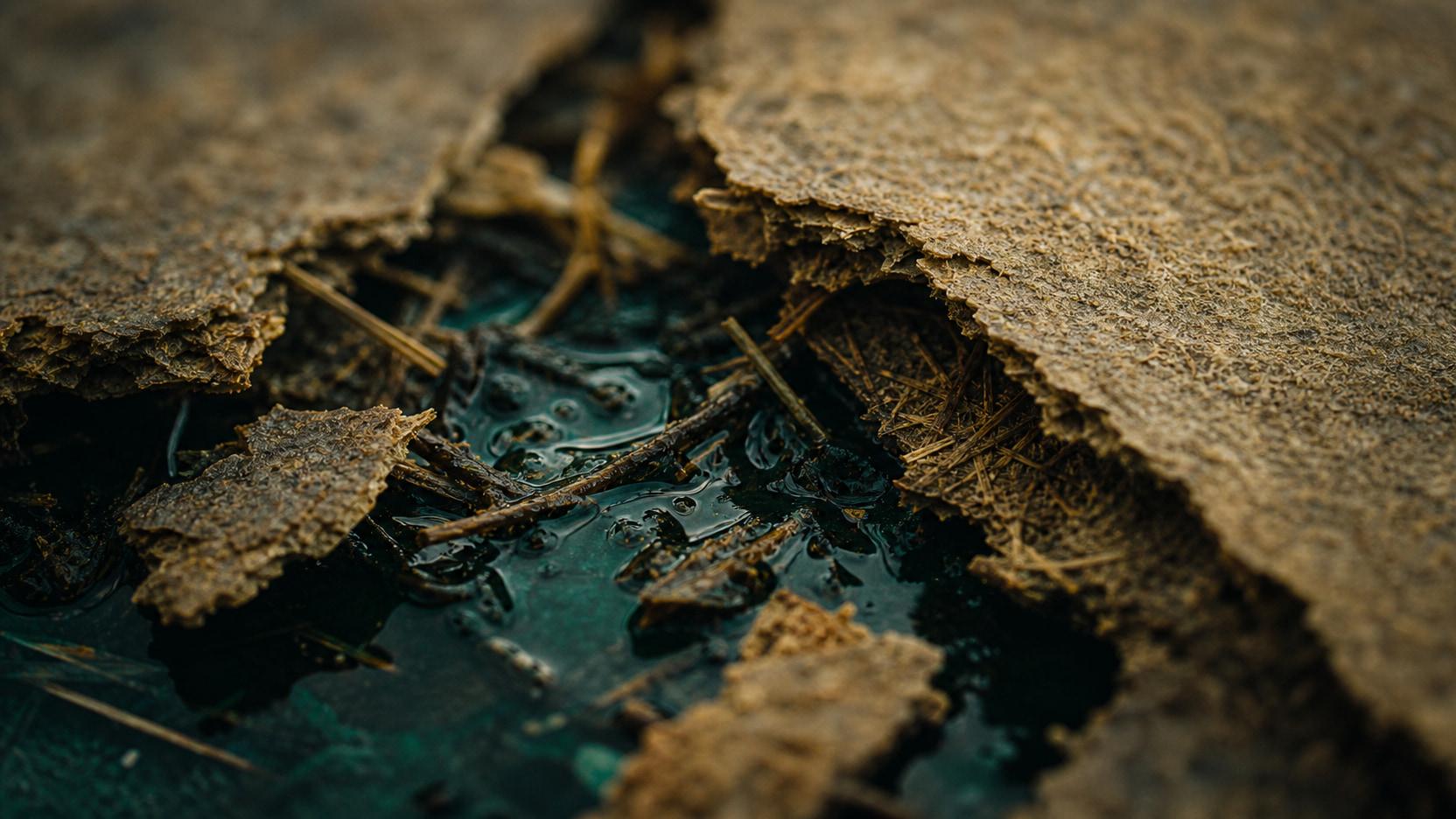
What a crust actually is
A fiber mat, not congealed manure.
What is manure crust?
Crust is a mat of fiber and other material that begins to float on top of liquid manure. Undigested fibers, dust, and other floating material collect at the surface, mat together, and gradually change the makeup of the pit. As the layer builds, it can become thick, dense, and difficult to break apart or pump.
PitCharger treatment is designed to help break down that fibrous material and weaken the crust so it can move back into the manure system.
The fiber that does not float settles instead and compacts into hardpan. That is why crust and hardpan are often the same problem at opposite ends of the structure, and why treating one usually means looking at both.
Are all PitCharger products the same?
No. PitCharger products are formulated for specific manure-management problems. Depending on the product, formulations may include aerobic, anaerobic, and facultative bacteria, enzymes, or other specific modes of action designed to address problems such as foam. Not every PitCharger product uses the same ingredients or works the same way. The product is selected based on the problem being treated.
Where a product does use bacteria, it matters that a manure pit is not one environment. The hardpan at the bottom is oxygen-free, the surface is not, and the zone between them shifts with temperature, agitation, and season.
| Single-strain products | Perform only in the narrow conditions the strain was selected for. A pit is not one environment — the bottom is anaerobic, the surface is not, and both change seasonally. |
|---|---|
| Multi-strain blend | Anaerobic strains work in the oxygen-free hardpan, aerobic strains at the surface, and facultative strains bridge both as conditions shift. Coverage across the whole structure rather than one zone. |
| Enzymes alongside bacteria | Enzymes break down complex material into forms bacteria can consume, accelerating the early stage before the population is fully established. |
| Cellulose-digesting fraction | The specific capability a confinement pit loses. Cellulose from feed and bedding is the raw material of both crust and hardpan, so this is the fraction that determines whether a stall reverses. |
How does PitCharger treatment work?
Assess the structure and the stall
A consultation establishes livestock type and head count, production stage, manure structure, current agitation and pump-out practice, and what you want out of the treated manure. Structure matters as much as head count: a deep pit, a pull plug system, and an earthen lagoon stratify differently and dose differently.
Apply the product selected for the problem
The product chosen for the problem is added to the pit or lagoon. Depending on the product, treatment may use bacteria, enzymes, or other specific modes of action. Application is simple, requires no protective protocol, and the products are described as safe around animals, children, and vegetation.
Break down fiber, solids, and crust
Treatment is designed to help break down the fibrous material that floats into crust and settles into hardpan, weakening the crust so it can move back into the manure system.
Agitation and pumping get easier
As solids and fibrous material break down, they become easier to suspend during agitation, so agitation is more effective and manure moves more easily during pumping. The goal is not to eliminate agitation; it is to improve the condition of the manure before you start.
More of the nitrogen becomes plant-available
In Iowa State testing, Manure Digester increased plant-available nitrogen by 21%. The treatment did not create additional nitrogen; it helped convert more of the existing nitrogen into a plant-available form, so more of what you paid for in feed reaches the crop in the season you spread it.
Treat monthly and measure over time
New fiber enters the pit continuously, so monthly treatment keeps breakdown ahead of accumulation. Most producers notice a difference within the first month; significant results are normally measured after about six months. Auto-Ship is available for scheduled monthly delivery.
How does PitCharger work with agitation?
PitCharger is designed to work with your normal manure-management process. As treatment helps break down solids and fibrous material, those solids can become easier to suspend during agitation. That can make agitation more effective and help manure move more easily during pumping.
The goal is not to eliminate agitation. It is to make agitation and pumping easier by improving the condition of the manure before you start.
What should you expect, and when?
First week
When it comes to odor, producers can often notice a significant change within the first week. Some producers have noticed a substantial change within the first 24 hours.
First month
Most producers should notice a difference within the first month, and odor keeps improving through the second and third weeks.
Months 2 and 3
Continued improvement. Crust weakens and moves back into the manure, and solids become easier to suspend during agitation and pumping. In a deep pit, much of this change happens below the surface before it is easy to see.
About 6 months
Significant results are normally measured after about six months. This refers to broader changes in the manure system, not odor reduction.

What you can see depends on the manure system. In a shallow pit, changes can often be noticed within the first month because the pit is checked and emptied more frequently. In a deep pit, treatment may be working and changing the manure below the surface long before those changes are easy to see. With eight feet of manure below the slats, the system can continue improving even when the visible surface looks much the same.
That is why we look at treatment progress differently in shallow pits, deep pits, and lagoons. The timeline is not always about when the product starts working; it is also about when the producer can reasonably see and measure the change.
Timelines are typical rather than guaranteed. Structure, climate, how long the pit has been stalled, and ration all affect pace.
The mechanism, in questions
Why does a manure pit stop digesting on its own?
In an open natural system, bacteria are continuously replenished from the surrounding environment. A confinement pit is effectively closed, so when the population that digests cellulose declines, nothing restores it. Manure keeps arriving, the fiber fraction stops breaking down, and it accumulates as crust on top and hardpan on the bottom.
What is manure crust?
Crust is a mat of fiber and other material that begins to float on top of liquid manure. Undigested fibers, dust, and other floating material collect at the surface, mat together, and gradually change the makeup of the pit. As the layer builds, it can become thick, dense, and difficult to break apart or pump.
How long does it take to see results?
Most producers should notice a difference within the first month, with continued improvement through the second and third months. Significant overall results are normally measured after about six months. Odor can respond much faster, often within the first week.
Why can a deep pit look the same while treatment is working?
In a shallow pit, changes can often be noticed within the first month because the pit is checked and emptied more frequently. In a deep pit, treatment may be working and changing the manure below the surface long before those changes are easy to see. With eight feet of manure below the slats, the system can continue improving even when the visible surface looks much the same.
Are all PitCharger products the same?
No. Different products are designed for different problems. Depending on the product, they may use aerobic, anaerobic, and facultative bacteria, enzymes, or other specific modes of action.
What is the organic nitrogen to ammonium nitrogen conversion?
Much of the nitrogen in raw manure is bound in organic compounds a plant cannot take up. Soil biology has to mineralize it first, on a timeline you do not control. In Iowa State testing, Manure Digester increased plant-available nitrogen by 21%. It did not create additional nitrogen; it helped convert more of the existing nitrogen into a form plants take up directly, so more of it reaches the crop in the season you applied it.
Does treatment work in cold weather?
Bacterial activity slows as temperature drops, so outdoor earthen lagoons work more slowly in winter than summer. Deep pits under a barn stay warmer and are less affected. Climate and structure are part of how rates and expectations get set.
What happens if I stop treating?
The population declines over subsequent months without maintenance dosing. New fiber keeps entering from feed and bedding, and once accumulation outpaces digestion the pit drifts back toward stalled — crust reforms, solids build, odor returns.
Related
Products
- Manure Digester: PitCharger's flagship product for monthly manure treatment. Contains up to 51 strains of bacteria
- LTC-E: Liquid treatment for higher-fiber manure and crusting, monthly or as an amendment when a crust needs extra help
- Crust Digester: Powdered bacteria-and-enzyme product used during barn washout to soak into and break down manure crusts
- N-Loc: For maximum odor reduction. Addresses odor-producing compounds in the system rather than masking them